
Riley’s Rainforest: Our Unfair Brains
“Send down . . . from the clouds of Thy mercy the rains of Thy healing ...” — Bahá’u’lláh
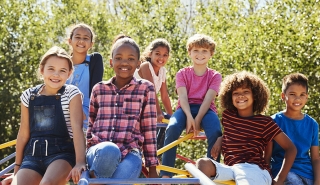
Is your brain prejudiced? Do you sometimes form unfair opinions without facts or experience? Unfortunately, the answer is probably yes.
In order to work well and learn quickly, our brains categorize information. If you try a leafy green vegetable that’s bitter, your brain may categorize all leafy greens as gross, and warn you not to eat more of them. That generalization is a bias.
Generalizing helps us avoid dangers like fast-moving cars or growling dogs. But if your brain creates a bias against people of another race, due to messages from the media or other people, that’s prejudice. It can lead to racial discrimination—treating others unfairly due to their ethnicity.
Research shows that we tend to think more positively about others when we share things in common (even minor things, like favorite sports teams, but also the same racial group). A test from Harvard University has people quickly link positive or negative words with white or black faces. About 70% of test takers react more positively to people from their own race.
Battling biases is tricky. Try to notice when your brain starts generalizing. Remember that people don’t represent their entire race or culture—each one is a unique person. When we know how our brains form biases, we can work to stop our unconscious prejudices.
Explore and Soar: Battle Your Biases
Here are some ways to help our brains see people as individuals and resist forming prejudices.
- Develop real friendships with people from different races and cultures.
- Read books with characters from diverse backgrounds.
- Focus on specific things about people’s personalities, not just their race.
- Think critically about messages you receive about race from your family, friends, and the media.
- Learn more about the history of racial groups in your country and how it affects life today.
- Join or form a club to explore how to work for racial justice.
- Learn about real individuals from diverse cultures, and keep them in mind when you hear someone using stereotypes to describe people.
Curiosity Canopy
Even babies can have bias! In one study, Caucasian babies at nine months old were quicker to respond to white faces. It also took them longer to recognize emotional expressions from faces of other races. Our brains generalize early, so challenging bias when you’re young is really important.
Photo by monkeybusinessimages/Getty
Riley113 Race Unity224 Unity252 Characters493 Science and Health55 Racial Equality8 Racism106 Challenges257 Prejudice144 Elimination of Prejudice118 Race55 Race Amity28 Riley’s Rainforest49 Openness39