
Stargazer: Masud Olufani
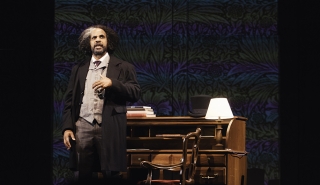
“Art is magic,” says Masud Olufani. He isn’t just a sculptor, he’s like a wizard who creates pieces that make you think, feel, hear, and even smell! He uses all kinds of materials— wood, steel, fabric, and clay, as well as video, audio, and food. He wants you to relate to his artwork with all of your senses.*
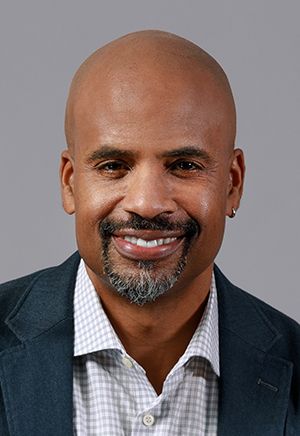
"Art ... is a stimulus for the spirit, for the soul," Masud says.
Born in California, Masud loved drawing as a kid. It helped him stay calm when his parents argued. They divorced when he was about seven. Masud lived mostly with his mom in New York, and she encouraged his creative spirit.
Masud studied art at Morehouse College in Georgia. He searched for his creative path for about 15 years while working as a waiter. In 2013, he earned a master’s degree in sculpture from the Savannah College of Art and Design.
Since then, Masud has shown his work around the world and won many awards. He also writes, acts in movies and plays, and teaches in schools, colleges, and prisons. Today, he lives in Atlanta, Georgia, and uses his creative powers to invite us into his enchanting world!
Q: What’s one of your favorite childhood memories?
Going to Disney World with my whole family ... my older brother, my mom, my dad, and me. I think I was five ... It was one of the rare times when we were all together and happy.
Q: What was the most challenging experience for you as a kid?
The dissolution of my parents’ marriage ... The thing that still sticks in my mind was their fights ... When my father left, my older brother left too ... I must have been six or seven, and ... I thought if I cried ... or pleaded in just the right way, I could get [my dad] to stay ... But it didn’t work.
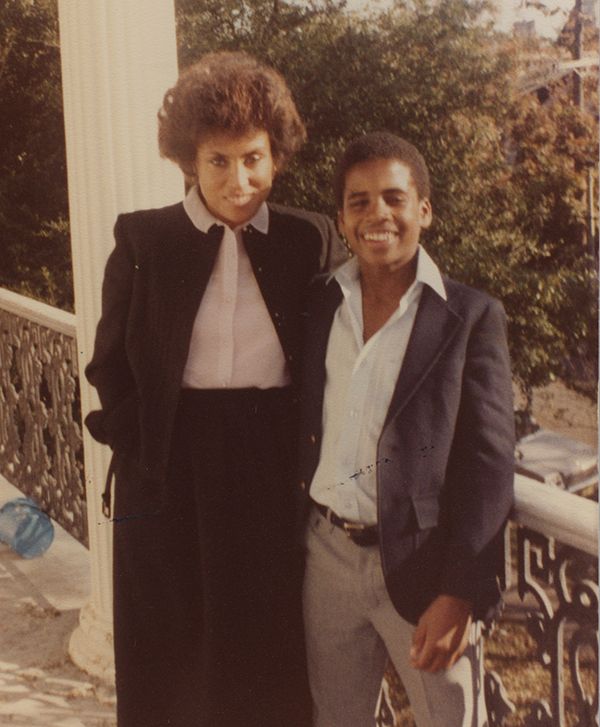
Though he mainly grew up in New York, at about age 14, Masud lived with his mom in New Orleans, Louisiana.
Q: What early experiences set you on the path toward your career?
I started drawing when I was four. And my mother, I remember the first drawing that she flipped out on—it was some cowboys ... They had dimension and depth. I wasn’t drawing stick figures ... She loved the arts ... She got me lessons, bought me books, took me to museums ... all that stuff. And I enjoyed it.
Q: Who or what has inspired you as an artist?
Early on, it was Michelangelo. My mom ... used to tell me that Michelangelo did this amazing painting in Italy, and he was on his back while he was doing it. That was the [ceiling of the] Sistine Chapel. And then I saw pictures of the Sistine Chapel. I was like, “Wow, that’s so cool.” ... And I was always interested in getting better at what I was doing, so I was always looking ... [and wondering] if I could do that someday.
Q: Some people say they aren’t creative or good at making art. How would you encourage them to try?
I think everybody has the capacity to be creative ... I’m starting to take African dance, and I have no intention of opening on Broadway anytime soon. It’s a hobby, a fun endeavor, a learning endeavor. I think so much of life is about finding ways to open ourselves up to the creative spirit that’s inside of all of us ... I’m all for creative play. I think that’s the arena for some remarkable discoveries about ourselves.
Q. You designed the monument for Robert Turner, the first African American Bahá’í. What was most meaningful about that process?
The diversity of the crew and the committee that did it ... that was really rich. Obviously, there’s a lot of historical significance—the first African American Bahá’í, the first time that a person of African descent within the Faith has designed any memorial of any significance in the Bahá’í Faith ... It’s about representation, which is so important ... And it’s about providing a space where people can contemplate ... this man’s life and what he meant, not only to the Bahá’í community, but also to the world. Whether the world recognizes it or not, in the future, they will ... [understand] the impact that his acceptance of Bahá’u’lláh’s revelation ultimately has ... I’m honored that I was [chosen to design it] ... it was really a joyful process.
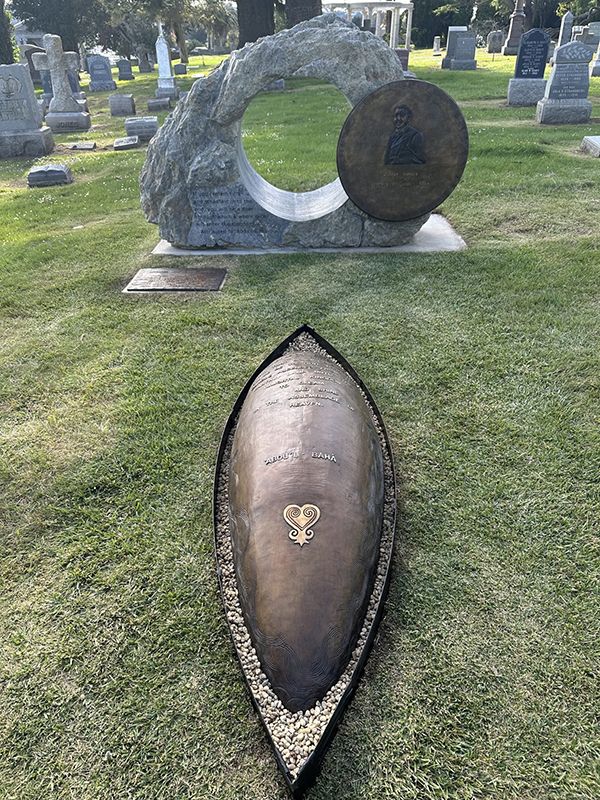
Masud designed the Robert Turner Monument in 2020. His main inspiration was ‘Abdu’l-Bahá’s promise to Turner that if he remained faithful, he would be a door through which an entire race would enter the kingdom of heaven.
Q: You also teach art in colleges, the prison system, and programs for kids. What do you love about teaching art?
Teaching itself ... is a mystical practice, and it’s theater and it’s performance ... I love the experience of seeing, of knowing that I’m reaching somebody in class with ... ideas that we’re exploring together in community. To see the light go on inside of them, that’s a magical moment. That’s what I love most about it. It’s such a giving vocation and practice. And giving in the sense of what the process gives back to you.
Q: You visited Sierra Leone a few years ago. What impact did that have on you and your art?
I found out ... that my ancestors were from Sierra Leone, on my mother’s side ... There’s something really remarkable about coming in contact with your ancestral homeland after you have been away ... you are the first one in your family since coming here that has been able to make that trip back. There was something really affirming in that. And then going to Ghana after that ... to the slave fortresses ... being in the presence of that history ... hearing the stories ... It transformed my art, I would say. There were forms that I was encountering, objects that were used for utilitarian purposes that I could see could be translated into artistic forms.
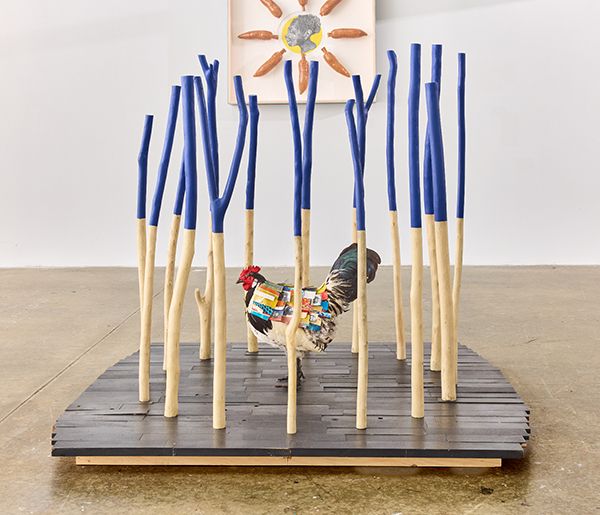
Masud’s “You Can’t Cage My Strut” sculpture is a response to the U.S. prison system, which unequally ensnares Black men. The strutting chicken conveys survival in African culture.
Q: What impact do you think art can have on social change?
Art ... is a stimulus for the spirit, for the soul ... It can draw out qualities in human beings. It can inspire us to think differently about the world ... [and] help us to envision a different future ... When [I’m] dealing with the issue of race, obviously I have personal interest in that, given the history of my family and watching the struggles in my family and in my community ... At a very young age, I was listening to the speeches of Dr. Martin Luther King Jr. I developed an interest in issues of racial justice. And that found its way into my work.
Q: What virtues are essential for you to practice in your work?
Perseverance, dedication, commitment, risk, failure, sincere humility. Courage—courage is big. Creativity, of course ... I always like to be almost at the very edge of what I think I can do ... because I know that I’ll learn something. Even if there’s failure, there’s learning in the failure.
Q: How has the Bahá’í Faith influenced your career choices or your work?
I believe fundamentally that if the teachings have penetrated your heart in a sincere way, you don’t have to micromanage how they’re going to manifest themselves in the world, in the work. They will be there ... One [young Bahá’í artist] asked me ... “What do you wish for us?” I said, “Freedom. I want you all to be free to explore your ideas, your concepts, the things that are important to you, trusting that the Faith is ... part of who you are, and that will guide you ... Trust that it’s in you.”
Q: What’s your advice for kids who want to pursue a career in the arts?
Making the decision to be an artist requires some thought and reflection. You have to ask yourself, “Is this something that I want to do, or something that I have a need to do?” ... And then, seek the best training ... that will equip you with the skillsets to articulate your creative vision. And ... this is great advice I got [from] another actor. [He said,] “Treat everybody genuinely and as if they are kings and queens. ’Cause the same people you meet going up are the same people you meet on the way back down.”
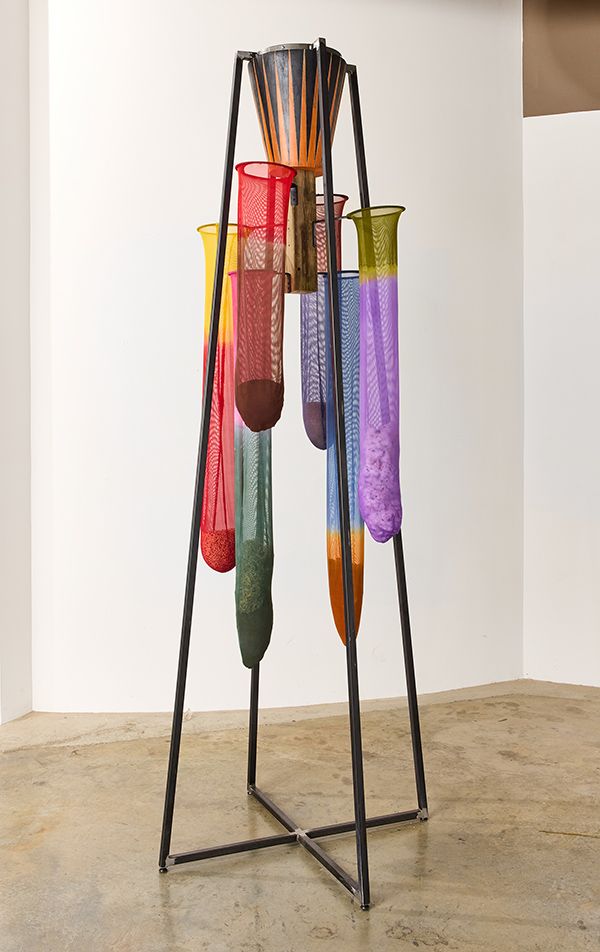
Masud debuted his sculpture, “The Rhythm and the Harvest,” in 2024 as part of his “A Sorcery of Sustenance” exhibition at the Atlanta Contemporary art museum. The sculpture is made from steel, wood, paint, tar, fabric dye, and nylon, as well as peat moss, Spanish moss, cotton, coffee, tobacco, rice.
*The nylon sacks in "The Rhythm and the Harvest" contain items from the natural landscape and agriculture of the American South. Masud intentionally included items—such as Spanish moss, coffee, and tobacco—that would keep their scent for a long time to engage visitors' sense of smell.
Photos: Portrait by PBS RetroReport; Masud as Frederick Douglass by J.D. Urban, courtesy of Hudson Hall; Robert Turner Memorial by Jasmin Kemp; sculptures by Russell Kilgore.
Discover553 Bahá’í Faith546 African American36 Creativity296 Arts and Crafts223 Art55 Bahá’ís in History210 Acting10 Teaching28 Writing52 Race Unity224 Equity4 Racial Justice4 Stargazers94