
Shining Lamp: Hazel Scott (1920–1981)
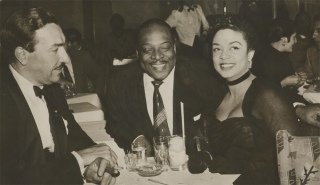

Hazel Scott was only eight years old when she auditioned at Juilliard, the famous school for the arts in New York City. It was 1928, and most students were white, male, and age 16 or older. Hazel wasn’t enrolled as a student, but a professor recognized her talent on the piano and taught her privately for 10 years.
Hazel wasn’t new to performing. She started around age three on her home island of Trinidad and continued when she and her mother moved to the U.S. Her skills grew, and she played at night clubs, sang on Broadway, and was in an all-woman band while in high school. By age 19, Hazel supported her family financially. She felt a responsibility with her music “to communicate a beauty that has been entrusted to [my] care.”
Speaking Out for Justice
Hazel also stood up for the rights of African Americans. At that time, Black women in movies were often cast as servants. When she appeared in films, Hazel insisted on approving her wardrobe and music, and she would only appear as herself, Hazel Scott, not as a character.
Throughout her career, Hazel worked against the racial prejudice that separated Black and White people in schools, buses, restaurants, and concert halls. She only performed for audiences where Black and White people sat side by side. She said, “Why would anyone come to hear me ... and refuse to sit beside someone just like me?”
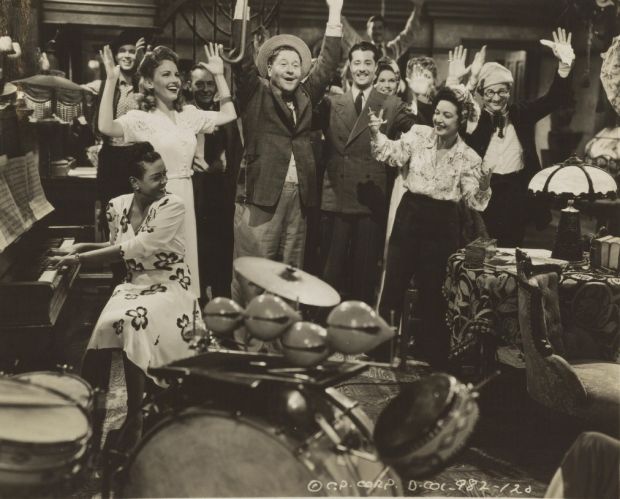
Hazel at the piano with cast members in 1943.
She was so successful that in 1950, she had her own TV show—a first for a Black woman! Only weeks into filming, Hazel was unjustly accused of being disloyal to the U.S. and investigated, like many other artists at the time. She testified without a lawyer, saying, “The entertainment profession has done its part for America, in war and peace, and it must not be dragged through the mud of hysterical name-calling ...”
Still, her TV show was canceled, and Hazel’s career in the U.S. plummeted. She moved to Paris and performed around Europe. In 1963, she and her friends marched in front of the American Embassy in Paris while 260,000 people protested against racial injustice in Washington, D.C., led by Dr. Martin Luther King Jr.
A Great Faith
Back home in the U.S. a few years later, Hazel’s friend, musician Dizzy Gillespie, told her about the Bahá’í Faith. In 1968, she became a Bahá’í. In one interview, she said, “There is only one God ... That’s what is great about Bahá’í ... We believe that whenever man has been ready to absorb more knowledge, God has revealed it.”
Even after her death in 1981, Hazel’s music can be heard on the many albums she recorded during her 61 years. She is remembered for her gifted contributions to jazz, films, TV, and equal rights. She said, “Who ever walked behind anyone to freedom? If we can’t go hand in hand, I don’t want to go.”
Photo credits: Music Division
Shining Lamps124 Shining Lamp55 Musicians26 Musician13 Explore46 Bahá’í Faith546 Bahá’ís in History210 Civil Rights5 Racial Equality8 WomenHistory29