
Stargazer: Tod Ewing
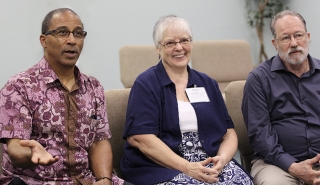
How would you feel if no matter where you went—school, the grocery store, a ball game—nobody was the same race as you? That’s what life was like for Tod Ewing until he was 10. Born in Minnesota, U.S., his was the only African American family in their town. They faced so much prejudice that neighbors even tried to stop them from moving into the neighborhood. Tod’s parents were Bahá’ís, and in spite of these challenges, they stayed strong, and they inspired Tod to work for racial justice.
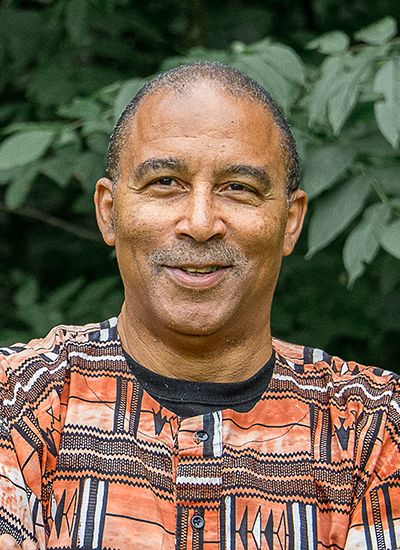
Tod earned a degree in criminal justice at St. Cloud State University in Minnesota. Later, he and his wife, Alison, moved their family to a more diverse area in South Carolina. In 1987, Tod and two friends launched a diversity training company, which helped organizations build unity among people of different races. Twenty years later, he co-created the Race Story ReWrite Project with Phyllis and Gene Unterschuetz. They empower people to form strong interracial relationships. Tod and Alison now live in Washington, D.C.
Q: What is your favorite childhood memory?
We used to have this golden retriever. It was a beautiful dog, and we lived out in the country. And this dog would just run off ... Sometimes at night, my dad and myself and my brother and sister would go lay on this hill, and my dad ... would whistle. And we would ... look all over the place and wonder where Duchess would come running from ... [She] was such a fun-loving dog ...
Q: How would you define racism?
Disliking somebody, prejudging somebody because of their color, and then having the power to make their life very difficult.
Q: What was the most challenging experience for you when you were a kid, and how did you handle it?
We were the only black family for 15 miles in any direction ... It was traumatic ... to not feel emotionally safe anywhere ... What helped me cope ... [was being] able to find a few friends.
Q: What virtues are important in the work you do?
Being just and fair-minded ... Being open enough and humble enough to listen ... Courage to speak your mind and tell the truth ...
Q: When kids face prejudice against their race or religion and they’re feeling hurt, what should they do?
They should discuss it with their parents ... If they are hurt because of something somebody says to them ... they could ... forgive the person ... [Or] you may want to help them understand [how] they hurt you.
But if it hurts so much, you may not be able to do that. You may need to go home or have a friend that you talk to until you can calm down and some of the pain goes away ...
That’s where ... courage come[s] in, or ... humility ... As children who are Bahá’ís or believe in oneness, [you’ll understand that] those people are your family ... You want to help [them] understand, so they don’t do it to other people ... Try not to see that person as your enemy ... [they] learned to be prejudiced from somebody ... Hopefully you can help them unlearn that ...
Q: What feeds racism in society?
People need to feel like they are better than other people ... Racism is fueled by materialism ... People wanted status and power, and that’s why slavery developed, and race became an excuse later on ... Now, because there’s so many stereotypes about people ... and there’s so many fears that have been created around people of color ... that fuels it, too.
Q: What are some things that kids can do every day to help stop racism?
Everybody can pray ... that there will be racial healing, and ... [that] they have opportunities to do something about racial injustice ... Go out of your way to talk to people that are different from you ... Get to know them and understand them and understand their life, what you have in common, what’s different ... Read stories about people who are of other races ... read about how racial prejudice works ...
Q: What is important for kids to know about racism in the U.S.?
If it isn’t happening to you, [that] doesn’t mean it’s not happening ... And it’s important to know that people have worked for many, many years to eliminate racial prejudice, [but] it’s still here. And that each of us has a responsibility to address it and to help move things forward ...
Q: If you had one wish for Brilliant Star’s readers, what would it be?
[It] would be that everybody sees ... that they have a role to play in eliminating racial prejudice and creating racial unity and justice ... and that they would ... be very intentional about deciding what ... they want to do about it.