
Parents and Teachers
Building Character
Developing Virtues
Ways to Nurture an Attitude of Thanksgiving in our Children
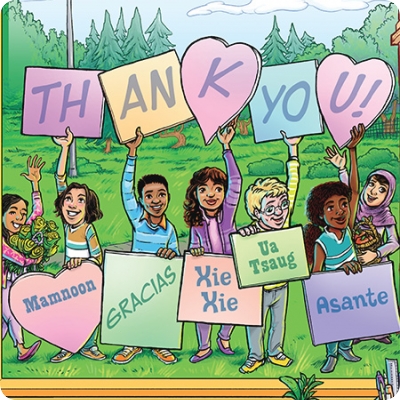
Let’s start with a reality check: We’re seeing an upsurge–even in a tight economy–of kids who are a bit too spoiled, a bit too unappreciative, a bit too self-centered and a bit more ungrateful for all the good things life has to offer.
Of course we want our kids to be happy and give them what they want. But have you noticed that sometimes our best intentions backfire? Instead of our kids being grateful for what they are given, they are disappointed or always seem to want “more”? In all fairness, there are a number of factors that curtail our kids from being appreciative about the good things of life. For starters:
- A relentless consumption-driven media that pushes kid to think they need more and a fast-paced lifestyle that leaves little time to help kids count their blessings.
- There is the also the sometimes overwhelming impact of troubling news that focuses on the bad parts of life instead of helping kids appreciate the good.
- Sometimes it’s our guilt for not being home enough, or those competitive instincts that compel us to keep up with the Joneses, so we lavish our kids with the latest and best of everything.
- Whatever the cause for the lack of appreciation, there is one crucial reason we must change for our kids’ sake.
Compelling research now proves that the happiest children are the ones who feel a sense of appreciation for life—and that’s regardless of their wealth or personal circumstances.
Those studies show that because kids feel grateful they are actually more joyful, determined, optimistic, resilient, less stressed and even healthier.
If you hope your child can achieve these traits (and what parent doesn’t) then you must replace any hint of an ungrateful attitude with gratitude. The good news is that there are also simple proven strategies to make that change happen for your child. Here are a few ways to boost an attitude of gratitude in our children—365 days a year!
7 Simple Ways to Boost Kid Gratitude
1. Model Gratitude
Kids learn gratitude by seeing others display appreciation in everyday, unplanned moments.
How often do your kids see you convey your appreciation with hugs, words, or small notes to others?
How often do you tell your kids how much you appreciate them?
Tune up your attitude of gratitude so your kids are more likely to copy your examples.
2. Set Limits
Having too much squelches appreciation. So fight the tendency to overindulge your child these new weeks with too many things.
Always giving kids what they want does not help kids learn to be grateful and appreciative of what they have.
3. Thank Your Kids
Don’t overlook your kids’ daily thoughtful deeds. Just be sure to tell them what they did that you appreciate so they are more likely to copy your example and send their own “appreciation messages” to others.
4. Expose Children to the Less Fortunate
Face-to-face experiences can go a long way in helping kids appreciate their blessings.
So find ways for you and your child to do charitable work (playing with kids in a homeless shelter, reading to the blind, building low-cost house, or delivering meals for the bed-ridden).
My girlfriend set a family tradition years ago. Every Thanksgiving her family goes to a soup kitchen to help serve dinner to the less fortunate. Her children—now grown—say it was the best family memory of the holidays. They learned from their parents’ example the importance of giving to others. Do the same ritual during the Christmas season, and then weave it into every other season, holiday, weekend or day.
The more children practice gratitude the greater the odds that they will adopt it as a habit and life attitude.
5. Say: "Thank you” and expect your kids to do so!
Parents who raise grateful kids don’t do so by accident. They expect their kids to be appreciative and saying, “thank you” is required from the time their kids learn to talk.
Keep in mind that kids may need constant reminders: “Did you remember to thank Jeff’s mom?” Don’t overlook their slips: “You can call to thank her when you get home.”
6. Understand the Emotion Behind the Gesture
A hard lesson for kids to learn is that they’re really thanking the person not for the gift but the thoughtfulness behind it.
“Grandma thought a lot about what to give you this year.” “Kevin went to five stores to try to find what would make you happiest.”
Keep reinforcing the thought that went into the deed. Practice with your child before the birthday, the family reunion, the holidays or any occasion where you child may be receiving a gift. Help him or her learn how to be appreciative.
7. Count Your Blessings
Say a prayer of thanks together before meals. But extend that so your children learn to count their blessings every day and reflect upon the good things in their lives. Here are a few ideas:
- Review the good things. Help your children “Count their Blessings” every night by just reviewing all the things they are grateful for. Our children are exposed to so much of the doom and gloom about life. Let’s help our children reflect on the simple, wonderful good things in our lives that we so often take for granted.
- Say “Thank you ABCs.” This one is great for younger kids to do at the dinner table. You and your kids say the alphabet together, but for each letter include something you are grateful for: A, Aunt Helen; B, my brother; C, my cat and so on. Take it up one notch by having the person explain why he is grateful. Families with small kids rarely get beyond H, but the point is that you’re having fun together, and your kids are also learning to be appreciative. Older kids can reveal one thing they are grateful for that happened to them during the day and why.
- Say Prayers of Thanks. Say a prayer of thanks together before meals. Some families take turns so that each night a different member leads the prayer.
- Create Bedtime Family Blessings. Each child exchanges messages of appreciation for one another, followed by a goodnight hug and kiss.
Enjoy these next days with your family and your time together. Just don’t forget to pause and count your blessings together and review all the things—both big and little—you are grateful for. After all, isn’t that what families are all about?
Michele Borba, Ed.D. is an internationally-known educator recognized for her solution-based strategies to build children’s character. Dr. Borba has spoken to over one million parents and educators in 43 nations. Her 24 books have been translated in 18 languages. Her latest is Thrivers: The Surprising Reasons Why Some Kids Struggle and Others Shine. She can be found at micheleborba.com or Twitter/X @micheleborba.
For more resources, sign up for
Brilliant Star's Parents & Teachers Newsletter!
Updated on 3.15.16