
Bahá’u’lláh’s Life: Art Is Worship
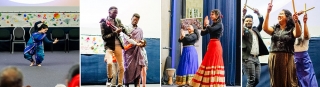
“Arts, crafts and sciences uplift the world of being, and are conducive to its exaltation.” —Bahá’u’lláh
"The true worth of artists and craftsmen should be appreciated,” said Bahá’u’lláh, “for they advance the affairs of mankind.”
Bahá’ís believe that practicing an art is a form of worship. Poetry, music, drama, visual arts, and other creative work can lift people’s spirits and share spiritual truths.
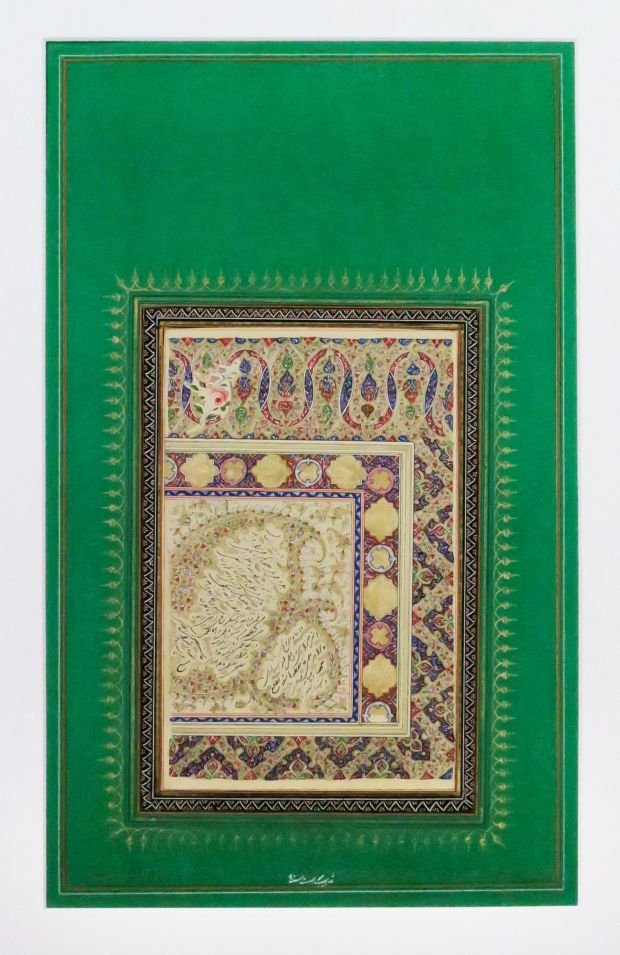
These verses from the Hidden Words are in Bahá’u’lláh’s own handwriting. The decorative designs were added later.
In one verse, Bahá’u’lláh said that when a faithful soul passes on to the next world, they provide power “through which the arts and wonders of the world are made manifest ...” Just as yeast makes bread rise, these souls help to inspire the arts on Earth.
While Bahá’u’lláh was imprisoned for His faith in the cold and filthy “Black Pit” of Tihrán, weighed down by massive chains, He revealed a joyful poem praising God.
Some time later, He was released and exiled to Baghdád, in what is now Iraq. Scholars asked Him to reveal a poem with a specific rhyme and meter they admired. Bahá’u’lláh dictated 2,000 verses and let the scholars keep 127 of them. The men agreed that Bahá’u’lláh’s poem was magnificent.
Many early followers of the Báb and Bahá’u’lláh were gifted artists. Bahá’u’lláh gave a devoted female poet the name Táhirih (“the Pure One”). At a conference of Bábís, He supported her when she bravely defied tradition by removing her veil and speaking out for equality.
Nabíl-i-A‘zam was another excellent poet. He gave the Bahá’ís a priceless gift by writing a history of the Faith’s early days called The Dawn-Breakers. Bahá’u’lláh reviewed and approved Nabíl’s work.
Bahá’u’lláh’s teachings attracted a calligrapher named Mishkín-Qalam. This brilliant artist was a private tutor to the Crown Prince of Persia (now Iran). Mishkín-Qalam left that position to be near Bahá’u’lláh. He spent many hours transcribing Bahá’u’lláh’s words in splendid calligraphy.
Celebration of the arts continued after the ascension of Bahá’u’lláh in 1892. His son, ‘Abdu’l-Bahá, said kids should “share in every new and rare and wondrous craft and art.” When ‘Abdu’l-Bahá’s grandson Shoghi Effendi led the Faith, he told Bahá’ís to share inspiring stories and other arts.
Today, the Universal House of Justice, the international governing body of the Faith, urges Bahá’ís to use the arts in community building. The House of Justice says, “When the sublime teachings of the Faith are reflected in artistic work, the hearts of people, including artists, will be touched.”
For a printed version, download a pdf of this page.
Photos © Bahá’í International Community
Bahá’í Faith546 Bahá’u’lláh163 BahaLife32 Arts84 Creativity296