
Stargazer: Dr. Ymasumac Marañón Davis
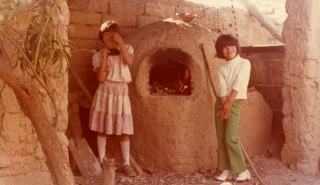
Have you ever moved to a new place and felt overwhelmed by all the changes? That’s how Ymasumac Marañón Davis felt at age eight, when she moved with her mom and sister from Vermont to a tropical Mayan village in Mexico. At first, she felt lost and cried every day. She didn’t speak Spanish or understand the customs of her new home. Thanks to her third-grade teacher, she began to learn Spanish and teach her peers a little English.

"Learn to release fear," Yma suggests for kids who want to learn how to build courage. "Get down as close as you can to the Earth. Because the Earth has an energy force that is very stable, and [it’s] good for us when we’re afraid."
Born in California to a White mother from New England and an Indigenous father from Bolivia, Yma (pronounced Ee-mah) had already had a challenging childhood. Her parents divorced when she was three. She often felt confused by the differences between her mother’s and father’s cultures and extended families. Her dad hadn’t wanted Yma and her sister to learn Spanish because he had endured hurtful discrimination for speaking English with a Bolivian accent. But Yma says learning Spanish while she was in Mexico helped her bridge the two cultures she came from. So did journaling and writing poetry.
Yma’s love of words led to a college degree in English Literature and writing for a hip-hop magazine. She loved her job, but the long work hours made it hard to raise two young children. Her mother suggested teaching because of its family-friendly schedule. At first, Yma wasn’t sure if she wanted to teach, but she discovered she loved being a bilingual education teacher. Later, she earned a master’s degree in psychology and helped families with communication and technology. Her learning journey then led to her doctorate in Education for Social Justice. Today, she trains teachers in Southern California and is an online instructor for the Wilmette Institute. Yma lives in an intergenerational home with her husband, Tod, and several family members.
Q: What’s one of your favorite childhood memories?
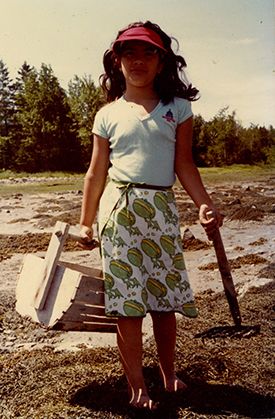
Around age 8, Ymasumac dug for clams on a beach in Maine, U.S., while visiting her mother’s relatives.
We would spend a lot of our summers with my mother’s family ... my grandfather was in Maine ... He’d have his woodworking shed and my sister and I would play in there, building stuff, which was always fun. And he was always very affirming … I remember one time [my sister] made a wooden chair, and she used scraps, so the seat of the chair was a scrap of wood that had a hole in it ... She was like, it’s OK, it’s still a chair. But I remember that my grandfather’s wife looked at it and she said, “It looks like a toilet” because of the hole. But my grandfather was just like, “Nope, it’s a chair. Jessica said it’s a chair.”
Q: What was the most challenging experience for you as a kid?
When we moved from New England to Mexico. I was eight years old. We moved to a very small village ... I didn’t know Spanish [then], so I just felt very overwhelmed and confused. I remember crying every single day. Just feeling very lost and unsure ... [But] I had an incredible teacher who was very, very good. And I remember that when she saw how overwhelmed I was, she did something that really changed everything for me. She came to school one day with a stack of pictures and she held up a picture and she looked at me and she said in broken English, “What is this?” And I looked at it and I said “corn.” And she looked at the class and the whole class chorused “corn,” and I was like, oh, and then she looked at me and she said “maiz.” And I said “maiz.” So, I began to teach the class English, and they began to teach me Spanish. And for me, the reason why that was a game changer is because suddenly I was a part of the classroom.
Q. As a youth, you were passionate about writing poetry. Why was it important to you?
When I was eight, my mother bought me a little Hello Kitty journal, and I just started writing ... It was a way of processing life and what was happening to me ... I felt like poetry tugged more at those places that were emotional, raw. I felt more connected to my soul ... In my poetry, I was working out ... being of these two very distinct cultures [that were] often pitted against each other, but they were living within me ... Poetry helped me make sense of them and not see them as enemies …
Q: Who or what inspired you to pursue a career in education?
I had not thought about being in education until my mother suggested it ... I was in my early 20s. I already had two children. I was a writer, and I loved working as a journalist ... but I was almost never home. And we both knew that wasn’t good for my kids. So she said, “If you were a teacher, you could have a schedule that would work for them.” ... I thought, well, I’ll try it for a year. And I loved it ... Once I decided, I thought of the two teachers that impacted me the most: Maestra* Leticia, [my third- and fourth-grade teacher], and Maestro** Orlando ... my fifth-grade teacher ... He would tell us these stories about ... history, but he always included the native story ... I think that resonated for me because of the way my father talked about being Indigenous. So those two teachers were my examples. If I was going to teach, I was going to teach like them.

Ymasumac (back row, far right) honored adults who took her seven-week Family Empowerment Workshop with certificates of completion. Participants were parents of high-school students in California.
Q: Please explain your field, education for social justice.
There is a certain power that comes with learning ... How and what you teach, who’s teaching, where, and why—all of that matters ... [In my field, we ask], how does this space uphold the nobility of these students, so they can be empowered? [They need] to participate in society on an equal basis with everyone else.
Q: How can kids balance their material and spiritual needs and keep a healthy balance with technology?
I think the forces around us, like materialism, consumerism, are strong right now. So it’s difficult, because we’re asking [kids] to learn to balance their own well-being with their use of technology ... They have to know they have an inner reality ... and your inner reality requires care and attention and nurturing ... It’s why I say prayers every day ... listen to beautiful music ... sing songs, these kind of things. And then I think adults need to help with the management of the technology. I think forces are too strong to ask youth and children to do it by themselves.
Q: What are your tips for kids who want to build courage?
Learn to release fear. I have an eight-year-old granddaughter, and whenever she’s really overwhelmed, I hold her hands and [say], let’s just take a deep breath. This is just fear, and that’s okay ... The other thing that I do is ... just get down as close as you can to the Earth. Because the Earth has an energy force that is very stable, and [it’s] good for us when we’re afraid, right? Because it grounds us ... From that calm, beautiful place, then we can take our next steps ... We solve emotions through our body ... Sometimes that means hugging a pillow and breathing ... then the problem solving can come in ...
Q: If you had one wish for Brilliant Star’s readers, what would it be?
To have a process, a way through which you can come back to your nobility again and again ... I think life bumps us out of our nobility or makes us think, “Oh, I’m a bad person. I didn’t do the right thing,” or “Everyone else can get it. I can’t. Something’s wrong with me.” My hope is ... when life does that to you, you’ll know how to make your way back. That ... could be through prayers ... dreams ... writing. For me, it was all those things ... Remember the truth of who you are ... Have a space where you can cry it out, release it, and then be like, “I'm actually doing pretty good. I am a pretty kind person.”

Four generations gather at Yma’s home. Front row: her granddaughters Alaya (left) and Ofeina. Seated: Yma’s mother, Susan. Back row, left to right: daughters Sahar and Samineh (with grandson Koda), son Kamal, Yma, husband Tod, and son Misak.
*Spanish: “teacher” (female)
**Spanish: “teacher” (male)
Photos: Portrait and family photo by Misak Marañón Davis. Work photo by Leticia Morales.
Discover553 Bahá’í Faith546 Courage84 Cultures141 Native Americans16 Education58 Educator4 Equality20 Equity4 Nobility15 Poetry19 South America23 Stargazers94