
Shining Lamp: Marion Jack (1866–1954)
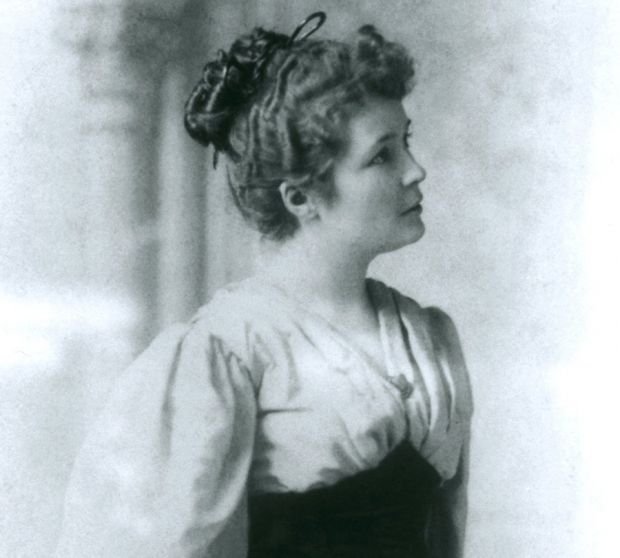
Marion at about age 18
As a kid, Marion Jack’s life was shaken by tragedy. By the time she was 10, she had lost three much-loved siblings. Soon after, her family’s house in New Brunswick, Canada, burned down. When she was in her late teens, her parents passed away. Yet Marion persevered and grew a strong spirit of service. She cared deeply about others’ hardships. She also had a “twinkling sense of humor” that helped her in hard times.
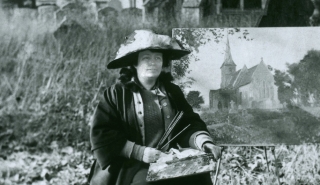
Marion found joy in art and loved painting landscapes. In her 20s, she studied in England and France. One night in Paris, she went to a costume party dressed in a brilliant red outfit she’d made from crinkled tissue paper. That night was the beginning of a new life. She learned about the Bahá’í Faith from a friend and soon became a Bahá’í.
Teacher and Traveler
In 1908, Marion was invited by ‘Abdu’l-Bahá, the head of the Faith, to teach English to his grandchildren in ‘Akká (now in Israel). Over six happy months, ‘Abdu’l-Bahá admired her sense of humor, leadership, and strength. He gave her a nickname: “General Jack.”
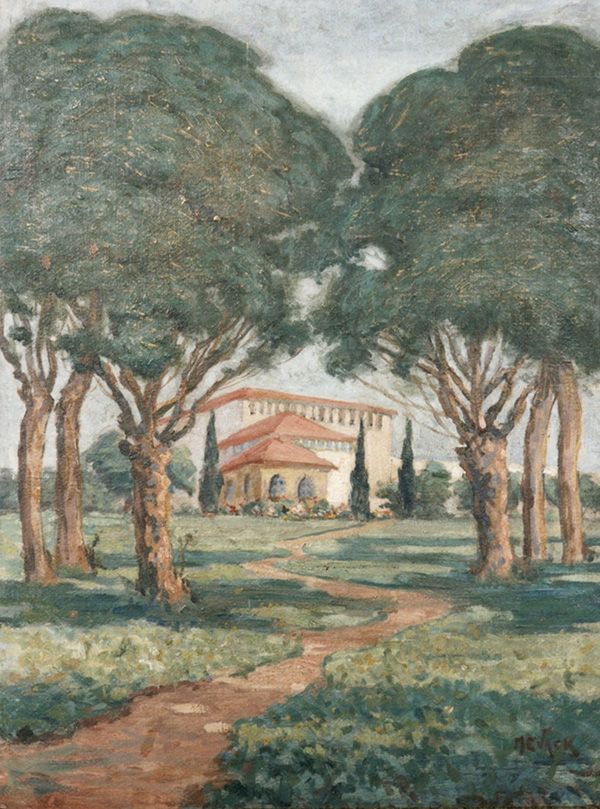
Marion created this painting of the Shrine of Bahá’u’lláh
Marion traveled widely to share the Faith, including to Alaska, Maine, and nearly every province in Canada. Her cheerfulness attracted friends everywhere.
Marion was 64 years old when a new journey began. Shoghi Effendi, who led the Faith after ‘Abdu’l-Bahá’s passing, asked her to move to Sofia, Bulgaria, to continue sharing the Bahá’í teachings.
She didn’t know how to speak Bulgarian and had health problems, but this didn’t stop her. Marion went and stayed for the rest of her life!
Heroism During War
When World War II began in 1941, food, clothing, and even heat were scarce in Bulgaria. The government restricted religion, and at times it was dangerous to be a Bahá’í or have meetings. Marion was questioned by police, and some Bahá’ís were arrested. Shoghi Effendi urged her to move somewhere safer, but Marion was determined to stay. She wrote to a friend that she loved to “see things stirring heavenward in the souls of the dear ones here ... This little country is my job ...”
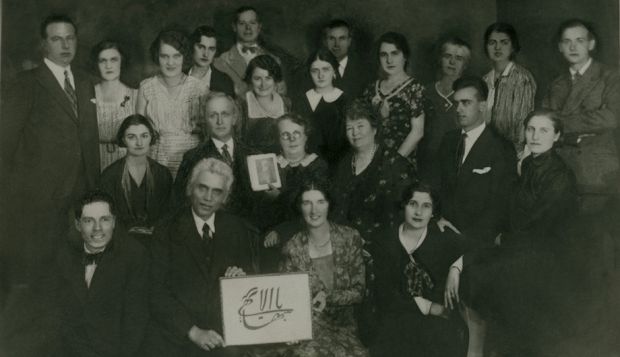
Marion (seated fourth from left in the second row) with the Baha'is of Sofia, Bulgaria in 1932.
In the midst of war, Marion bravely helped build the Bahá’í community. Shoghi Effendi saw her sacrifices, writing, “Your patient and strenuous labors ... in circumstances that are truly most difficult and trying have endeared you to us all ...”
In 1944, Marion’s home was destroyed in a bombing. She spent a year sharing a crowded room. After the war, mail was unreliable. Marion had little and often didn’t receive money or clothing sent to her. Still, she persevered. Shoghi Effendi called her a “SHINING EXAMPLE”* to all who travel to a new place to teach the Faith: a faithful pioneer.
When she died in 1954 at age 87, Shoghi Effendi declared that her grave would be a blessing for Bulgaria. Over the years, he praised her dedication, courage, humility, and perseverance. He said she was an “IMMORTAL HEROINE.”