
Stargazer: Dr. Augusto López-Claros
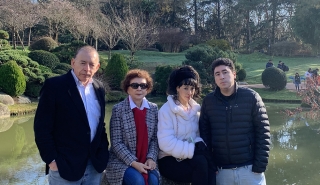
Would you stand in front of hundreds of people and translate a speech into another language? That’s what Augusto López-Claros did in Bolivia when he was 19. Even more amazing, the speaker was a leader in the Bahá’í Faith—‘Amatu’l-Bahá Rúhíyyih Khánum!* She was the wife of Shoghi Effendi, the Faith’s Guardian. She had visited Augusto’s home when he was 11, and she inspired him from then on.
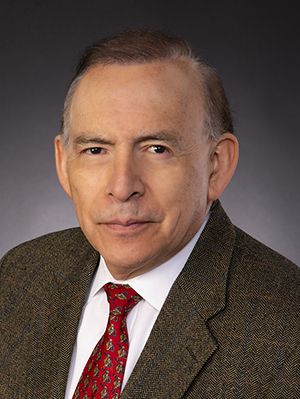
Augusto believes, "It is not what one does, it is the spirit in which
one does it ... service is tremendously, tremendously important."
Augusto was born in Bolivia in 1955. Soon afterward, his mother became a Bahá’í. She was later elected to the national governing body of the Bahá’ís. Augusto remembers their loving meetings at his home. At age 15, Augusto went to live with his aunt in Alaska, U.S. to finish high school. He was great at math, which he studied at Cambridge University in the U.K. He earned a doctorate in economics from Duke University in the U.S. He’s worked as an economist in many countries, including Chile, Russia, and the U.S. Today, he’s Executive Director and Chair of the Global Governance Forum, based in Switzerland. He lives in Spain with his wife, Mirta.
Q: What’s one of your favorite childhood memories?
When I was 12, my father sent me to a German boarding school in a small, beautiful little town [for] several months ... I was very homesick ... [But] it changed my outlook ... I became much more studious.
Q: What was the most challenging experience for you as a kid?
My parents divorcing when I was nine ... My mother and the three of us kids, we moved back to Cochabamba [from La Paz] ... But my father was a good man ... he was always present in our lives. A few years later, [my mother married] a Bahá’í ... So, we grew up in a Bahá’í family ...
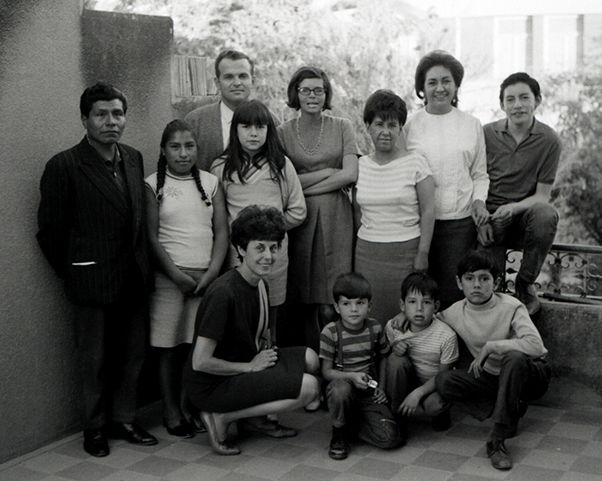
In 1969, Augusto and his family gathered with Baha'i friends in Cochabamba, Bolivia (standing, Augusto and his mother are at far right; his brother Enrique is just below them, and his sister Trini is fifth from the right).
Q: What set you on the path toward becoming an economist?
When I came back from Germany, I discovered that I had a gift for math ... My first [college] degree and my first graduate degree [were] in mathematics. ... Economics came later in life ... Over time, those aspects of economics that attracted me the most were issues of development, things like poverty and inequality and gender, and that also resonated very powerfully with the teachings of the Faith in this area. So in my profession, I could also find a kind of an echo from the Bahá’í writings.
Q: What is the Global Governance Forum?
[It] is an organization that understands that global challenges ... poverty, inequality, gender discrimination, violence, climate change ... require nations coming together to address these problems on a global scale ... For example, we are working on a revision to the United Nations Charter ... to address problems like climate change and poverty.
Q: What inspires you to work on economic and government issues at a global level?
I think it is the sense that humanity is at risk ... Can we reform our institutions or create new [ones] that will give us a better chance of addressing these global problems before we are overwhelmed by a series of crises? ... My primary motivation is to come up with proposals and solutions that are practical and sensible and workable ...
Q: Do you think humanity will ever achieve world peace?
I think we will ... People are realizing that unless we make a serious effort to rethink our global governance system, we put our future at risk ...
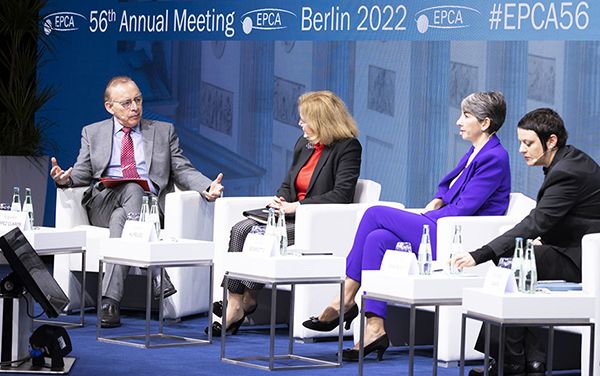
In October 2022, Augusto spoke to an industry group in Europe about leadership.
Q: How can women’s equality help create better lives for everyone?
Discriminating against women is not just a violation of [their] rights, it’s also bad economics ... When you educate women and you empower them through education to join the workforce ... [they have] much more leverage in terms of how those resources are used ... More money gets spent on education, public health, the health of the children ... [That] contributes to economic growth in the future because ... you’re going to have a better-educated labor force. You have healthier children ... because the mother has a say in how the resources are used.
Q: What's your advice for kids who want a career working towards social and economic justice?
They should be ambitious in terms of educational attainment ... Go to college, and if they can go to graduate school and acquire some additional qualifications ... they should try to do that as well ... Maybe you don’t want to become a lawyer. Maybe you want to become a musician ... Study music and get the highest qualifications and acquire the best skills that are going to facilitate your development as a musician, as an artist, as a painter—whatever it is that motivates you and really becomes your life’s passion.
Q: What can kids do now to help build a good foundation for their own economic growth and stability?
Education, that’s the answer ... I would urge everybody ... [to] use the gifts that God gave us upon our birth, to develop them and put them to good use for the service of humanity ... In this age of technology and complexity, we need to make a special effort to get the most and the best education that we’re capable of getting ... It is not what one does, it is the spirit in which one does it ... Service is tremendously, tremendously important.
Q: If you had one wish for Brilliant Star’s readers, what would it be?
It would be that ... they find a sense of identification with the Central Figures** of the Faith—their lives, their writings—in a way that will strengthen their sense of identity [in] this Faith ... When you have that emotional, spiritual, intellectual link to the Faith ... It gives you strength in life. It gives you patience, courage, energy. It gives you all the skills that you need to navigate this difficult world.
* To learn more about ‘Amatu’l-Bahá Rúhíyyih Khánum, see https://brilliantstarmagazine.org/articles/amatul-baha-ruhiyyih-khanum-1910-2000
** The Central Figures of the Bahá’í Faith are the Báb, Bahá’u’lláh, and ‘Abdu’l-Bahá.