
Endangered Animals and How You Can Help
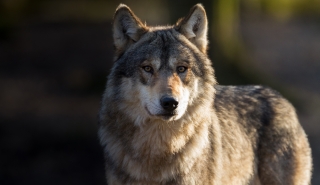
“It is not only their fellow human beings that the beloved of God must treat with mercy and compassion, rather must they show forth the utmost loving-kindness to every living creature . . . Be infinitely tender and loving to animals.” — ‘Abdu’l-Bahá
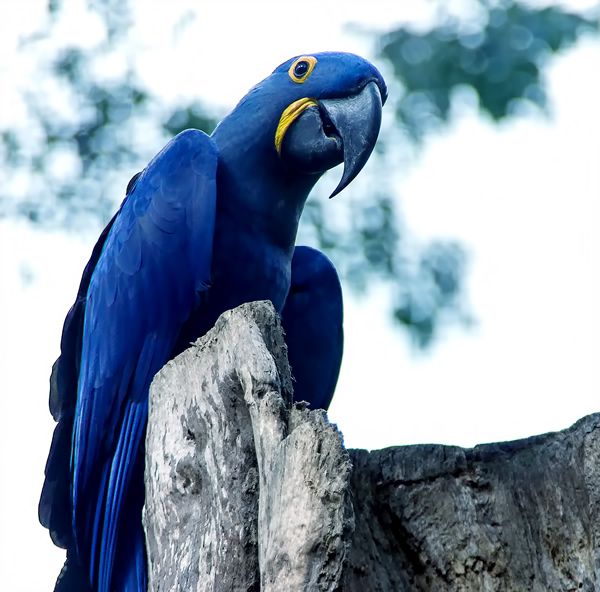
Deforestation and habitat loss are accelerating the extinctions of bird species.
The animated film Rio follows Blu and Jewel, endangered Spix's macaws, who were captured by smugglers. After some exciting adventures, they escape to live together in the wilds of Brazil. Unfortunately, today there are no Spix’s macaws in the jungles of Brazil or of any country. It has become extinct in the wild. An animal is endangered when only a few are left alive. When no more are left, it is extinct.
Why do animals become endangered? Sometimes humans destroy their habitats by polluting land, rivers, and seas or clearing rainforests. Some animals are killed when they return to their old homes after migration, but the land is now used by people. Some animals are hunted illegally for sport, for food, or for profit. Some are killed to sell items such as elephant tusks. Even climate change can endanger animals by making their food and water scarce.
Why Is It Important To Save Endangered Animals?
The connections among plants, animals, Earth, and people form a community called an ecosystem. The different parts of an ecosystem work together and support each other. A meadow is an ecosystem where bees pollinate plants and flowers, which then provide food for them and other animals. Beavers dam a stream to create an ecosystem of slow moving water where new fish and plant life thrive and attract other animals. This is the balance of nature. When we upset this balance, animals can become extinct. Their beauty is gone. The diversity of nature decreases. And we forever lose them and their contribution to the ecosystem.
The Bahá’í teachings support caring for the Earth and its creatures, saying that we are tied to the world around us: “Man is organic with the world . . . The one acts upon the other . . .” and “All created things are connected one to another by a linkage complete and perfect, even, for example, as are the members of the human body.”
Food Chains in Ecosystems
An important part of an ecosystem is how each living creature gets its food to survive. This feeding relationship in an ecosystem is called a food chain. It can be very complex and fragile.
This graphic shows how each part of a food chain affects other parts. Each creature is food for the creature below it. Click on the image to see it gradually change, showing what happens if fishermen catch too much tuna and disrupt the food chain. The dolphins, which eat tuna, lose their food source, so fewer can survive. With fewer tuna, the herring, which are eaten by tuna, increase in number. Then there are too many herring feeding on zooplankton, and the zooplankton disappear. With no food source, the herring can die out. So overfishing tuna can affect many other sea creatures and collapse an entire food chain!
Where Are Animals Endangered?
What endangered animals can you think of? You probably know of animals like tigers, elephants, or whales that are endangered. You may first think of animals that live far away, but there are species in trouble almost everywhere on Earth. The IUCN Red List (by the International Union for Conservation of Nature and Natural Resources) gives data on the status of thousands of endangered plant and animal species. In the U.S., the Fish and Wildlife Service lists endangered animals. In fact, most states in the U.S. have a service that tracks its endangered plants and animals. Here are some of the hundreds of endangered animals in the U.S. alone.
Gray Wolf
Years ago, the gray wolf lived throughout North America. But their habitat shrunk as settlers moved west. Because they attacked livestock and sometimes people, state and federal governments encouraged hunting and killing them. By the 1960s, they were nearly extinct in the U.S.
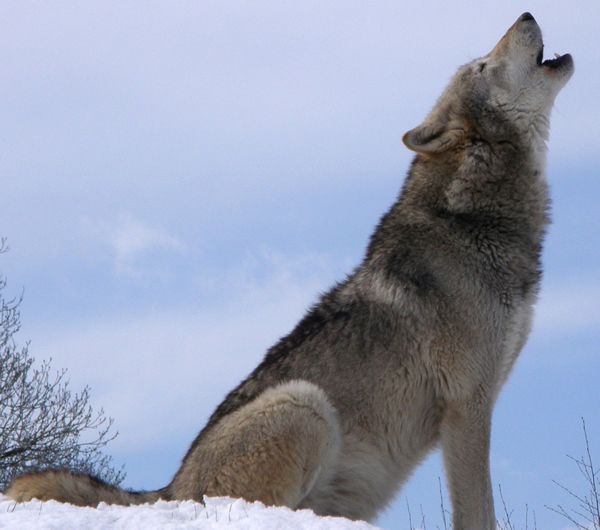
The gray wolf is at risk of losing its protected status.
To help wolves and other creatures, Congress passed a law called the Endangered Species Act, which safeguards the lives and habitats of listed species. Since then, wolf populations have recovered, and over 5,000 wolves now live in the lower 48 states. Wolves reintroduced into the Yellowstone National Park in 1995 had a great effect. Animals and plants that were long gone returned, and even the rivers and streams changed course benefiting the entire ecosystem. But conservationists are concerned that because of such success, their federal protection will be removed.
Sierra Nevada Bighorn Sheep
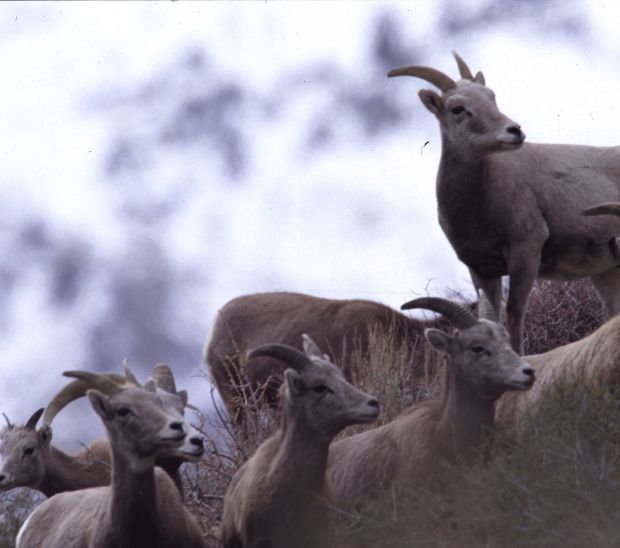
These sheep live only on the Sierra Nevada mountain range.
Sierra Nevada bighorn sheep are only found in California. Though physically tough—gracefully climbing steep and rocky mountains, going a week without water, and head butting with 800 pounds of force—they are also susceptible to many diseases. Years of hunting, disease, and predators reduced their numbers to only about 100 by 1995. They became protected by law in 2000. The state of California leads the effort to increase their population. Though still endangered, there are now over 600 sheep in closely watched herds.
Bog Turtle
The bog turtle is one of the smallest turtles in North America. You can recognize it by the yellow splotches on the side of its head.
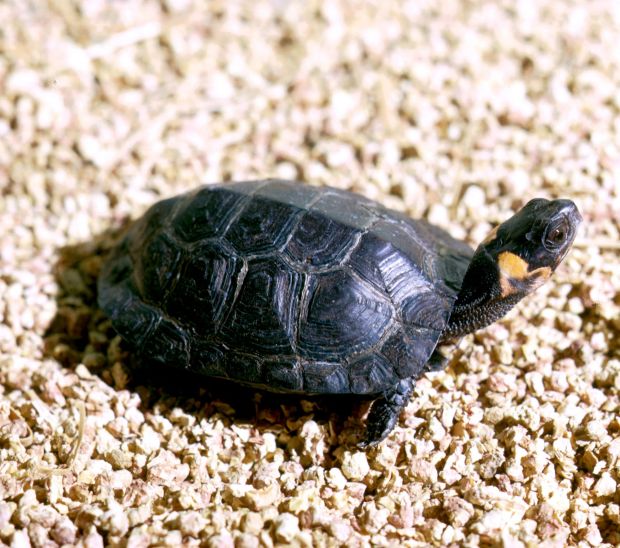
At about four inches, bog turtles are one of Earth’s smallest turtle species.
There may be as few as 2,500 bog turtles left in they wild. They’re endangered because they’re sensitive to conditions of their habitat—the marshes and swamps in the eastern part of the U. S. Their survival is threatened by non-native plants invading their habitat, habitat loss from development of roads and neighborhoods, and climate change. They’re also popular as pets and are collected and sold illegally.
What Can You Do To Help Endangered Animals?
- Start by thinking and asking questions about your daily actions. How do they impact the environment and the animals that live in it? How do you treat the habitats and the animals you find in nature? Can you take better care of your pets? Can you reduce your use of energy and water?
- Learn about endangered species in your area. You may not be able to save the Amur leopards in Russia (there are less than 70 left in the wild), but you can do a lot closer to home. Find out if there are conservation groups in your area that offer education programs. You can help spread the word about animals’ needs.
- Help reduce pollution. Practice treating our ecosystems with kindness and love by not littering. A recent report by the Government Office for Science in the U.K. noted that 70% of marine litter is plastic, which can last for hundreds of years. And this litter may triple over the next 10 years. So avoid using plastic, and recycle whenever possible. You and your friends may also be able to help collect plastic bottles and other recyclables. Local organizations, parks, or your city government may even have programs where you can be a volunteer.
Because humans are connected to nature, we also help ourselves when we protect animals and preserve the environment. We can’t be healthy without a healthy world to live in. You and your friends can make a difference!

Dr. Steve Scotti is Brilliant Star’s STEM Education Advisor and a Distinguished Research Associate at NASA Langley Research Center in Virginia, U.S. His background is in developing lighter, stronger materials and structures for aircraft and spacecraft. Watching the first astronaut launched into space inspired his interest in space exploration, and he enjoys sharing his enthusiasm about science and space with kids.

Nefertiti Smith is originally from New Jersey but considers many parts of the world her home. She is in the final year of her undergraduate studies at Hampton University in Virginia, majoring in marine and environmental science. She plans to earn a doctorate degree in ecology and become a scientist who impacts change through her research.
Photos: Top wolf by Waitandshoot, macaw by Zenobillis, howling wolf by Retron, sheep by California Dept. of Fish and Game, turtle by Tucker/USFWS
Environment177 DrScotti63 Earth191 Animals159 Science206 Oceans54 STEM Station32 Science and Religion23 Nature176 Dr. Scotti6 STEM269 STEAM47 STEAMS78