
Bahá’u’lláh’s Life: Radiance and Joy

“Live ye one with another, O people, in radiance and joy. By My life! All that are on earth shall pass away, while good deeds alone shall endure ...”
—Bahá’u’lláh
From the start of His Mission as a Messenger of God in 1853, Bahá’u’lláh faced imprisonment and exile from His home in Persia (now Iran). Officials wanted to stop the influence of the Bahá’í Faith. But even in prison, Bahá’u’lláh revealed holy writings, urging humanity to build justice and peace.
In ‘Akká (now in Israel), Bahá’u’lláh wrote the Kitáb-i-Aqdas, His Most Holy Book. It includes the laws of the Bahá’í Faith. He called these laws “the breath of life unto all created things” and urged Bahá’ís to “obey them with joy and gladness ...”
Bahá’u’lláh revealed laws about topics such as worship, marriage, wealth, education, and government. He also explained how to develop our souls: “Recite ye the verses of God every morn and eventide.” But He said we shouldn’t read too much. “Lay not upon your souls that which will weary them and weigh them down, but rather what will lighten and uplift them ...” It’s better to read one verse with “joy and radiance” than to read a lot in a half-hearted way.
Bahá’u’lláh usually revealed His teachings aloud while His secretary wrote quickly. Others transcribed His words, handwriting copies for Bahá’ís. One devoted transcriber was Jináb-i Zayn.* He compiled Bahá’u’lláh’s answers to over 100 questions from Bahá’ís about laws in the Kitáb-i-Aqdas.
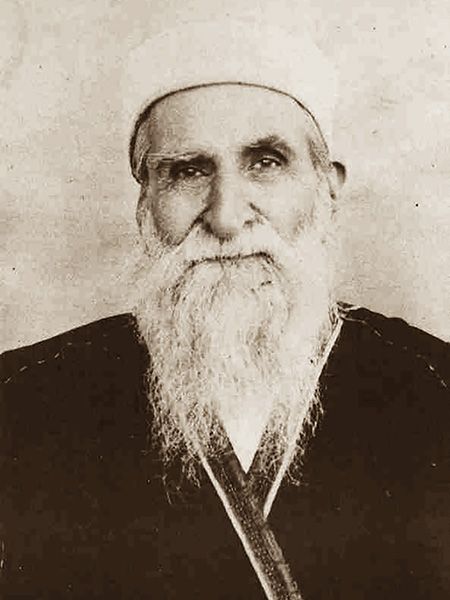
‘Abdu’l-Bahá said of Jináb-i-Zayn, “This distinguished man was one of the greatest of all the Báb’s companions and all the loved ones of Bahá’u’lláh.”
Jináb-i-Zayn had suffered intense persecution for being a Bahá’í. He was driven from his home in Baghdád (now in Iraq). He and a friend got lost, with no food and water for five days. They couldn’t ask for help because people threatened their lives. Both men were near death when they reached Mosul, 400 miles (644 km) away. After they recovered, the Bahá’ís turned to Jináb-i-Zayn for guidance, calling him “Father of the Exiles.”
Around 1886, Jináb-i-Zayn moved to ‘Akká to be near Bahá’u’lláh. He lived in an inn called the Khán-i-‘Avámid. It was damp and full of fleas. ‘Abdu’l-Bahá, Bahá’u’lláh’s eldest son, lived there too. There wasn’t enough money for repairs.
‘Abdu’l-Bahá said Jináb-i-Zayn copied sacred verses with “faultless care.” He encouraged Bahá’ís and “warmed the travelers’ hearts.” He transcribed volumes of the writings as a gift for Bahá’u’lláh.
Bahá’u’lláh revealed the Bahá’í Faith to “build anew the whole world.” When we absorb His writings, they can transform our souls. We can help create a fair and united world where “all the peoples of the earth may attain unto abiding joy ...”
*Zaynu’l-Muqarrabín was given this name by Bahá’u’lláh. It means “the ornament of them that are nigh unto God.” The title “ Jináb” conveys respect.
Photo © Bahá’í International Community
BahaLife32 BahaTheme65 Bahá’í Faith544 Bahá’u’lláh162 Holy Writings39 Baghdad22 ’Akká43 Persecution47 Laws9 Exile31