
Bahá’u’lláh’s Life: Empowering Women

“Unto every father hath been enjoined the instruction of his son and daughter in the art of reading and writing and in all that hath been laid down in the Holy Tablet.”
—Bahá’u’lláh
What if you never had a chance to achieve your goals? You couldn’t go to school, travel, or even show your face in public. That was life for many women in Persia (now Iran) in the 1800s. They were treated as men’s property and deprived of human rights.
Bahá’u’lláh stood up to these injustices. He said, “Women and men have been and will always be equal in the sight of God.” The Bahá’í Faith is the only religion in recorded history that holds the equality of women and men as a central teaching. Bahá’ís believe gender equality is essential in order for humanity to live in peace.
At a time when it was rare for women to be able to read and write, Bahá’u’lláh said parents should educate daughters and sons in the same subjects. In His sacred writings, He “lifted distinctions” between men and women and “conferred upon all a station and rank of the same plane.” This was a unique and groundbreaking statement for His time.
To Bahá’u’lláh’s wife, Ásíyih Khánum, He gave the honored titles Navváb, meaning “Highness,” and the “Most Exalted Leaf.” He helped her with the cooking, a task typically done by women. He was saddened by the hardships she faced during their exiles. When she passed away, He revealed a prayer in her honor, saying, “Woe betide him that denieth thy exalted station ...”
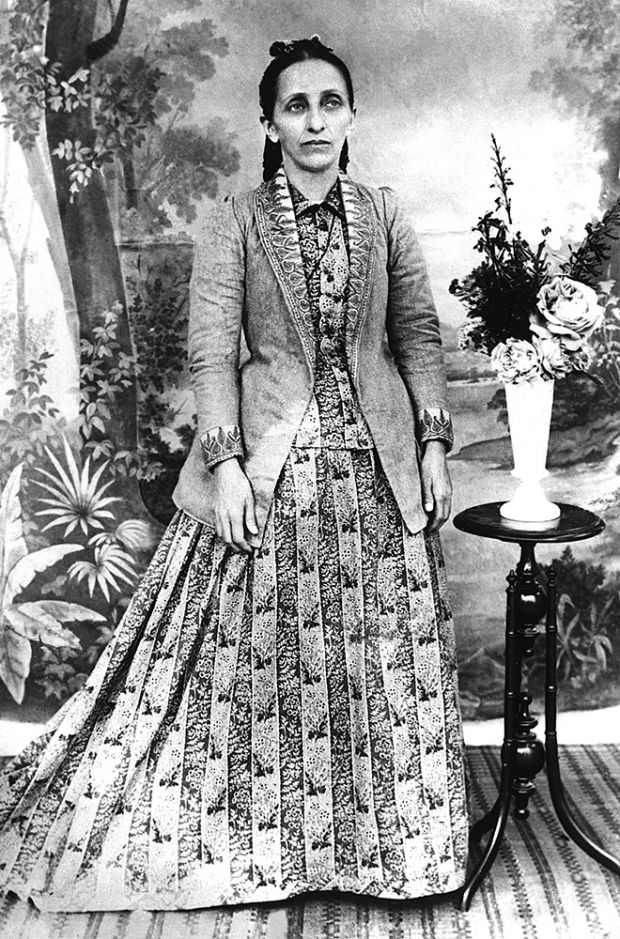
Bahíyyih Khánum
When their daughter, Bahíyyih Khánum, was in her teens, Bahá’u’lláh entrusted her with “missions that no girl of her age could, or would be willing to, perform.” She eagerly achieved them with “spontaneous joy.” Bahá’u’lláh called her the “Greatest Holy Leaf” and told her, “We have elevated thee to the rank of one of the most distinguished among thy sex, and granted thee ... a station such as none other woman hath surpassed.”
Bahá’u’lláh encouraged His female followers and revealed tablets for them. In Baghdád, He showed extreme kindness to an elderly woman that He often met on His route to the coffee house. He asked about her health, and when she wanted to kiss His cheeks, He would bend down so she could do so. He often said, “Because I love this old woman so much, she also loves Me.” When He left Baghdád, He arranged for her to have financial support for the rest of her life.
After Bahá’u’lláh’s passing, His eldest son, ‘Abdu’l-Bahá, continued to promote justice for women. He spoke in favor of their voting rights and gave them significant roles in the Faith. He explained that if a family doesn’t have enough money to educate both a girl and a boy, the girl’s education must be the priority, because she is a potential mother. She will share her knowledge with her children and uplift society.
Today, Bahá’ís and Bahá’í-inspired groups around the globe stand at the forefront of efforts to establish justice for all women and share the importance of true equality worldwide.
For a printed version, download a PDF of this page.
Photos: © Bahá’í International Community
Bahá’í Faith544 BahaLife32 Bahá’u’lláh162 Bahíyyih Khánum5 Equality of Women and Men56 Gender Equality26 Holy Family28 Bahá’ís in History209 Navváb6 Greatest Holy Leaf2