
Sapphires, Rubies, Diamonds, and Pearls
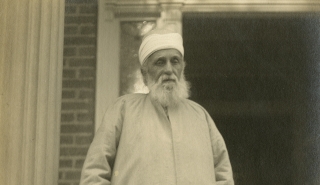
When ‘Abdu’l-Bahá visited the U.S. in 1912, slavery had been outlawed for almost 50 years. Still, unfair laws, mostly in the South, severely limited the rights of African Americans. They were called “Jim Crow” laws, named for a stereotypical dark-skinned character who was mocked in musical shows.
Jim Crow laws prohibited African Americans from using the same parks, schools, buses, hospitals, and even cemeteries as White people. In many places, it was illegal to marry someone of another race. People were arrested, beaten, and even killed for challenging these laws.
In Washington, D.C., racial segregation was a fact of life. Though the Bahá’í teachings proclaim the oneness of humanity, even some Bahá’ís felt the time wasn’t right for integrated meetings. Many hotels didn’t allow them. But ‘Abdu’l-Bahá insisted that Bahá’ís welcome people of all races. He answered more than one invitation by saying he would come if both Black and White people were invited.
‘Abdu’l-Bahá urged White and Black people to be friends. He praised diversity and shared the science behind skin color. Since melanin, the skin's brown pigment, is a natural sunscreen, darker skin tones evolved to protect people in areas with intense sunlight (such as Africa).
At the home of Andrew and Maggie Dyer, a mixed race couple, ‘Abdu’l-Bahá said to an interracial audience, “In the clustered jewels of the races may the blacks be as sapphires and rubies and the whites as diamonds and pearls. The composite beauty of humanity will be witnessed in their unity and blending.”
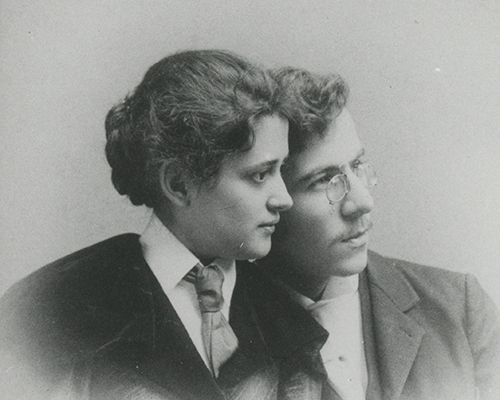
Pauline and Joseph Hannen held interracial Bahá’í gatherings in Washington, D.C.
Pauline Hannen was a Bahá’í in Washington who had feared Black people due to prejudice she’d learned growing up in North Carolina. But over time, the Bahá’í teachings changed her heart. One day, she met a Black woman whose arms were full of packages. The woman’s shoes were untied and she couldn’t bend to tie them. Pauline wrote, “Something in the picture brought to me the spirit of universal brotherhood. I knelt in the snow and tied the wayfarer’s shoes. She was astonished, and those who saw it appeared to think I was crazy. I did not mind...” From then on, Pauline worked to “uproot the prejudice of childhood and render loving service to all humanity.”
Pauline and her husband, Joseph, shared the Bahá’í Faith with people of all backgrounds. At a talk in their home, ‘Abdu’l-Bahá said, “This is a beautiful assembly. I am very happy that white and black are together.”
Pauline said, “There is such a spiritual power present when ‘Abdu’l-Bahá is around... We have eyes for no one save ‘Abdu’l-Bahá.”
In Washington and around the world, ‘Abdu’l-Bahá’s inspired people to fight racism and establish loving friendships among all cultures.
Download a print version of this story
‘Abdu’l-Bahá photo © Bahá’í International Community; Hannen photo courtesy National Bahá’í Archives
Bahá’í Faith546 Unity252 Race Unity224 Bahá’ís in History210 ‘Abdu’l–Bahá139 Master57 Elimination of Prejudice118 Race Amity28 Oneness of Humanity107 Race55 Racism106 Prejudice144 Injustice77 Diversity131