
Timeline: ‘Abdu’l-Bahá, Servant of Bahá
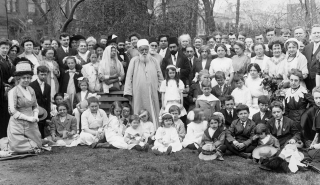
“O Lord, my God! Give me Thy grace to serve Thy loved ones, strengthen me in my servitude to Thee ...” —‘Abdu’l-Bahá
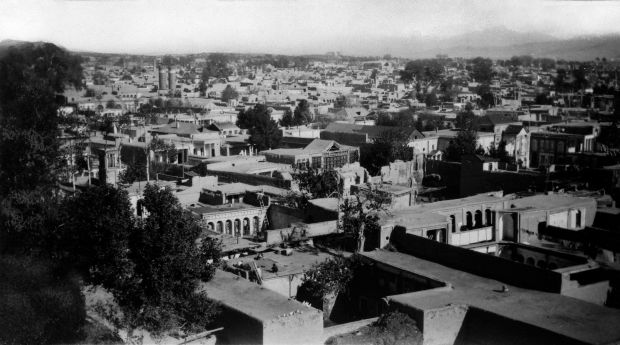
On May 23, 1844, ‘Abdu’l-Bahá was born in Tihrán, Iran, and named ‘Abbás Effendi (he later took the name ‘Abdu’l-Bahá)
Can you imagine how you’d feel if your father was unfairly imprisoned, your home was attacked, and your belongings were stolen? That happened to ‘Abdu’l-Bahá when he was eight. His father, Bahá’u’lláh, was thrown into a terrible dungeon in Tihrán, Persia (now Iran) for four months. Though Bahá’u’lláh had done nothing wrong, He was persecuted because He followed the Bábí Faith.
The whole family was in danger. When ‘Abdu’l-Bahá went outside, he was chased by kids who threw stones at him. The family barely had enough food. One day his mother gave him a handful of flour to eat because they had no bread.
In the prison, Bahá’u’lláh had a divine vision revealing that He was a Messenger of God with a new religion—the Bahá’í Faith. His teachings would promote world peace, the oneness of humanity, and the elimination of prejudice.
When Bahá’u’lláh was released, the family was forced to leave Persia. They were banished to Iraq, and then to what are now Turkey and Israel.
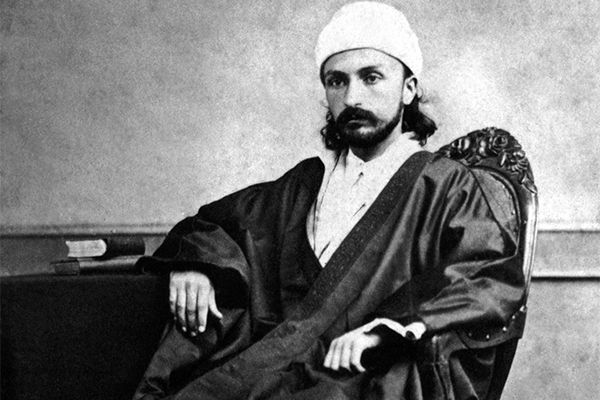
From 1853 through 1868, ‘Abdu’l-Bahá assisted his family as they were exiled to Baghdád (in Iraq); Constantinople (Istanbul) and Adrianople (Edirne, in what is now Turkey); and ‘Akká (in what is now Israel).
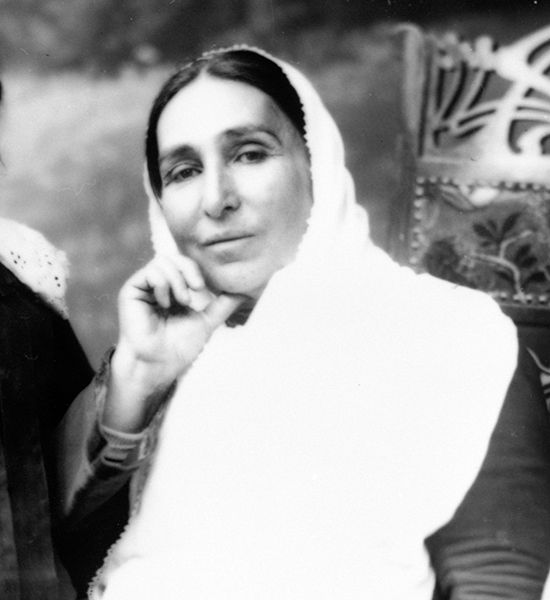
On March 8, 1873, ‘Abdu’l-Bahá married Munírih Khánum in ‘Akká
Through these ordeals, many people didn’t understand Bahá’u’lláh’s station as a divine Messenger. But ‘Abdu’l-Bahá understood, and he did his best to be of service to Bahá’u’lláh and His followers. Many people, including government officials and religious leaders, admired ‘Abdu’l-Bahá’s wisdom, kindness, and generosity. Bahá’u’lláh called him “the Master.”
Center of the Covenant
After 40 years of exile for His teachings of peace, Bahá’u’lláh passed away in 1892. He left a written will appointing ‘Abdu’l-Bahá as the leader of the Bahá’í Faith. These instructions are Bahá’u’lláh’s Covenant—an agreement with His followers that prevents the Bahá’í Faith from breaking into separate groups. ‘Abdu’l-Bahá is known as the “Center of the Covenant.”
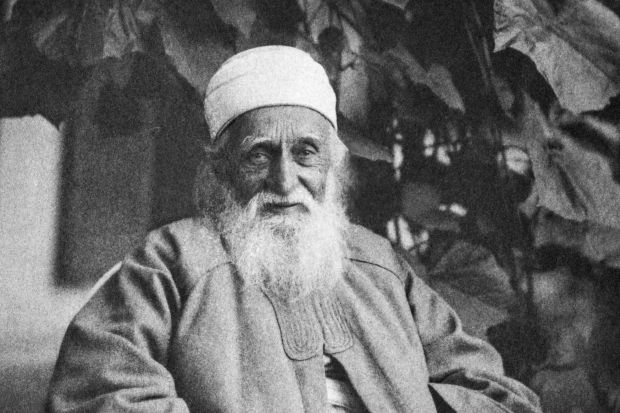
After the Ascension of Bahá’u’lláh on May 29, 1892, ‘Abdu’l-Bahá became the leader of the Bahá’í Faith.
‘Abdu’l-Bahá put into practice his father’s teachings of love and kindness. He visited the poor and sick of ‘Akká, gave them money, and even provided warm cloaks in the winter. He encouraged Bahá’ís to share the Faith around the world. Though he was officially a prisoner in ‘Akká, ‘Abdu’l-Bahá was so respected by officials that he was able to leave the city to pray at Bahá’u’lláh’s holy resting place, or shrine, at Bahjí.
But some people were jealous of ‘Abdu’l-Bahá’s influence and spread lies about him. In 1901, the Sultán of Turkey decided ‘Abdu’l-Bahá would be confined within the walls of ‘Akká. ‘Abdu’l-Bahá grieved that he could no longer visit Bahá’u’lláh’s shrine. He had a cabin built on the roof of his house, where he would look toward Bahjí and pray.
Epic Journeys
Finally, in 1908, ‘Abdu’l-Bahá was freed. His first act was to visit Bahá’u’lláh’s shrine. He then embarked on epic journeys to share the Bahá’í teachings. From 1910–1913, he visited Egypt, Europe, and North America.
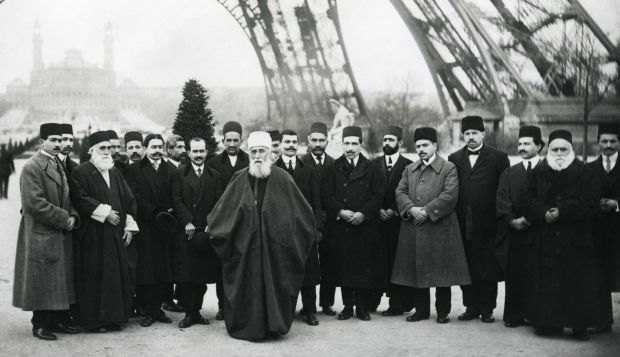
‘Abdu’l-Bahá visited Paris in 1911 and 1913.
Though in his late 60s and in poor health, ‘Abdu’l-Bahá had amazing energy and perseverance. Each day, from morning to night, he met with people from all walks of life—scholars, officials, journalists, clergy members, and families. He gave hundreds of public talks.
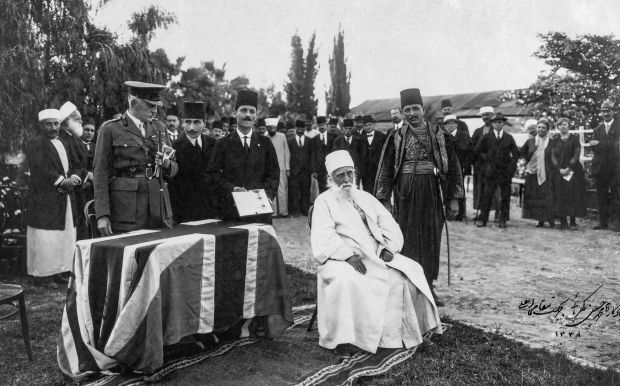
He was honored with knighthood for his service during World War I.
When ‘Abdu’l-Bahá returned to Israel, he guided the Bahá’ís through World War I (1914–1918). He ensured that crops were grown and food given to those in need. For this work, he was awarded a knighthood by Britain in 1920.
After decades of selfless service, ‘Abdu’l-Bahá passed away at age 77, on November 28, 1921. Ten thousand people mourned at his funeral. Muslim, Christian, and Jewish leaders gave speeches praising him. He was laid to rest in a room of the Shrine of the Báb on Mount Carmel.
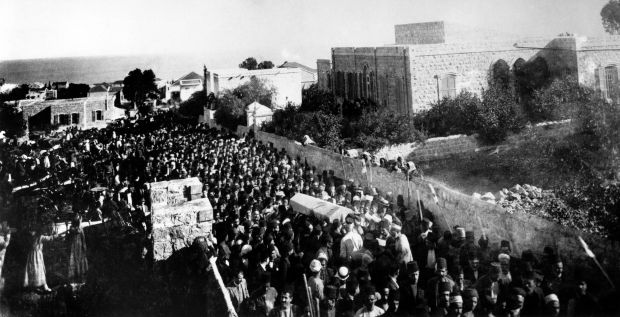
Ten thousand people of many faiths paid their respects at ‘Abdu’l-Bahá’s funeral.

Shoghi Effendi became the Guardian of the Bahá’í Faith after ‘Abdu’l-Bahá’s Ascension.
In his Will and Testament, ‘Abdu’l-Bahá protected the unity of the Bahá’í Faith by extending the Covenant. He appointed his grandson, Shoghi Effendi, as the Guardian of the Bahá’í Faith. Shoghi Effendi led the Bahá’ís until his passing in 1957. ‘Abdu’l-Bahá also gave instructions for electing the Universal House of Justice, an international council of nine, which guides the Bahá’í community today.
In the century since the passing of ‘Abdu’l-Bahá, the Bahá’í Faith has circled the globe. There are now over five million Bahá’ís. In 2019, the Universal House of Justice announced that a shrine to honor ‘Abdu’l-Bahá would be built near ‘Akká, on land “consecrated by the footsteps” of Bahá’u’lláh.
Candles of Unity
‘Abdu’l-Bahá described seven candles of unity in 1906. He said, “Each and every one of these will inevitably come to pass, inasmuch as the power of the Kingdom of God will aid and assist in their realization.”
- Unity in the political realm
- Unity of thought in world undertakings
- Unity in freedom
- Unity in religion
- Unity of nations
- Unity of races
- Unity of language
Photos © Bahá’í International Community
‘Abdu’l–Bahá139 Bahá’í Faith546 Covenant6 Bahá’ís in History210 History53 Timeline7 Service308 Unity252 Community21 Faith27